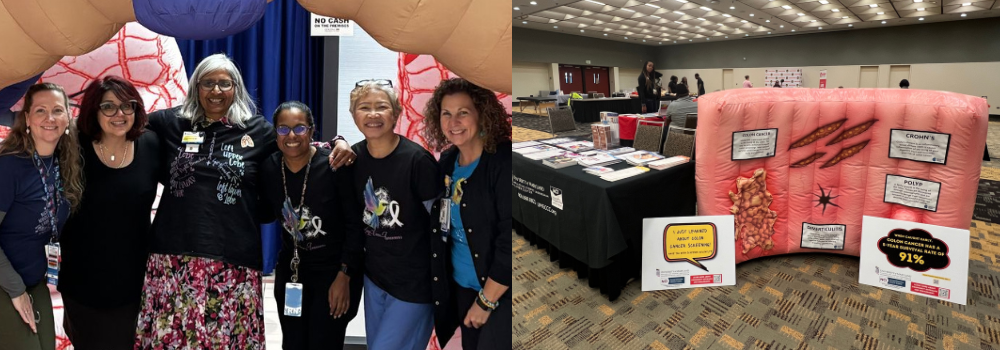
Aim 2 of the Office of Community Outreach and Engagement is to conduct evidence-based and impactful cancer control activities serving those in the UMGCCC catchment area. These activities are driven by data from Aim 1 and our COE strategic planning process. Activities include but are not limited to disseminating and implementing evidence-based interventions and guidelines, public education, and public health policy impact. We are committed to delivering evidence-based cancer education and control strategies tailored to the communities we serve. We use a data-driven process to prioritize cancer education and outreach activities based on the cancer burden in our catchment area. Our outreach efforts are grounded in data and shaped by community feedback to ensure relevance, cultural appropriateness, and impact.
Our key cancer education and outreach activities include:
Baltimore City Cancer Program
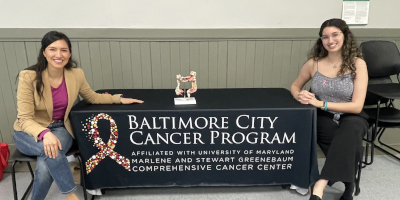 The Baltimore City Cancer Program aims to reduce cancer disparities by promoting early detection and connecting individuals to timely, high-quality care. The program provides education, screening, diagnosis, treatment and support services with a focus on breast, cervical, and colorectal cancer. Initiated in 2001, this program serves residents of the metropolitan Baltimore area with household incomes at or below 250% of the Federal poverty line. Dr. Ntiri serves as the Medical Director, supported by an administrative, outreach and clinical staff that includes community outreach workers/health educators, nurse case managers, and patient navigators. Multiple members of the outreach and education team are bilingual in English and Spanish. This program provides no-cost education, screening, diagnostic, treatment and survivorship support services for income-eligible individuals and conducts COE activities in metropolitan Baltimore. and the immediately surrounding metropolitan area.
Cancer Health Ambassador Training
Our Cancer Health Ambassador training is designed to train and certify lay individuals to learn about cancer and disseminate the knowledge to others in their communities and social networks (e.g., churches, housing communities, senior centers). The Ambassador training includes modules on top catchment area cancers (prostate, breast, colorectal, lung) as well as training in the Ambassador role (e.g., conducting cancer education/outreach events; active recruitment strategies; ethics). Provided in person, virtual, and hybrid format in both English and Spanish language, these trainings have shown significant increases in cancer knowledge and screening behaviors among participants. To date, we have trained and certified over 500 Cancer Health Ambassadors in Maryland.
For more information, contact Dr. Devlon N. Jackson at djacks04@umd.edu
Maryland Tobacco Control Resource Center (TCRC)
 The Maryland Tobacco Control Resource Center supports tobacco use prevention and treatment for the State of Maryland, linking professionals and providers to state tobacco cessation initiatives, providing evidence-based resources to local programs, and supporting a collaborative network of tobacco prevention/treatment professionals. This center educates healthcare professionals about tobacco cessation, vaping, and lung cancer screening. Center leaders spearheaded the implementation of a tobacco clinical decision support system to refer patients to the Maryland Quitline through the Epic electronic health record. This system is used by clinicians in all 156 University of Maryland ambulatory sites. The University of Maryland Medical Center Nicotine Health Clinic was established in 2019 as a comprehensive tobacco/nicotine treatment clinic, offering personalized coaching and free nicotine replacement therapy.
Other Cancer Education and Outreach
The COE team regularly participates in health fairs, cancer educational workshops, and provides expert speakers on cancer. These events are supported by evidence-based cancer educational materials and presentations to increase cancer knowledge and encourage cancer screening. The COE team has partnered with community- and faith-based organizations, senior centers, schools, survivor groups, area employers, and other partners to provide community education and outreach surrounding cancer prevention and early detection, reaching over 9,600 people since 2021.
UMGCCC-AstraZeneca Partnership in Lung Cancer Screening Initiative
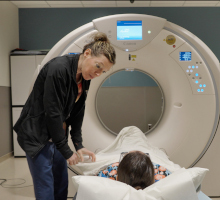 The University of Maryland Marlene and Stewart Greenebaum Comprehensive Cancer Center (UMGCCC) and AstraZeneca are working together to enhance and improve community-based lung cancer screening rates. Lung cancer is by far the leading cause of cancer death in the US and within Maryland, Baltimore County and Baltimore City, rank in the top counties in the US for lung cancer risk. Residents in over half of Maryland counties are at high risk for developing lung cancer, however very few receive routine screening services.
Through the use of a mobile van equipped with a low-dose CT scanner, the Partnership will serve high-risk, urban, rural, and low-resourced communities across the State of Maryland, screening those who are at high risk of developing lung cancer, so an early treatment or intervention can be offered thereby reducing the incidence and/or mortality of lung cancer and associated health issues. Utilizing this multidisciplinary approach the Partnership will reach Marylanders statewide; no patient will be left behind.
This Partnership, will be a core public health service, bringing together the best science and innovations for the public good and promote access to these services through technology and innovative strategies