Aim 3 of the Office of Community Outreach and Engagement is to apply community engagement strategies to inform research throughout all UMGCCC Programs. This involves communicating community needs to UMGCCC leadership, ensuring that clinical trial enrollments reflect the demographics of our catchment area, and that research priorities are aligned with the UMGCCC and COE strategic planning process. Community engagement is a guiding principle that informs the UMGCCC’s research enterprise and ensures that our research is responsive to the cancer burden in our catchment area and beyond.
Through our COE Strategic Planning Process, we:
- Analyze data to identify cancer priorities within our catchment area
- Conduct a Community Cancer Needs Assessment
- Engage regularly with our Community Advisory Board
- Coordinate closely with UMGCCC leadership and research programs
The Office of COE regularly disseminates data from these four sources to UMGCCC leaders and members, to inform cancer research. This structured approach ensures that our cancer research reflects the priorities of our catchment area and contributes to health equity. We also work to ensure that clinical trial enrollment reflects the diversity of our community and that our findings are translated into real-world impact.
The Office of Community Outreach and Engagement learns about planned research through the Pre-award Research Appraisal process. In this process, the principal investigator completes a form at the pre-award stage when developing a research proposal. This form requires the principal investigator to provide a lay abstract of the research and to indicate whether they would like catchment area data and/or a tailored letter of support for the proposal. The principal investigator also has an option to share their research plans with our Community Advisory Board, and these updates are disseminated on a monthly basis.
We conduct Community Research Forum meetings with UMGCCC researchers and community stakeholders/patients, convened to support a specific research project at the request of the principal investigator. Similar to a focus group, these meetings facilitate bidirectional communications between researchers and community members, to help inform and contextualize the research.
The UMGCCC pilot research program supports community-informed cancer research. The Office of Community Outreach and Engagement provides technical assistance to investigative teams to support authentic community involvement in their research.
Examples of our community-engaged cancer research activities include:
Cancer Immunotherapy Research
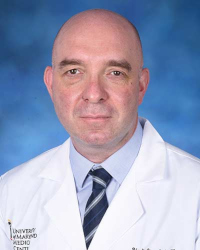
The Office of Community Outreach and Engagement supports cancer immunotherapy research led by Dr. Djordje Atanackovic . Cancer immunotherapy research involves treatments that use the body’s immune system to eliminate cancer. Based on a foundation of immunotherapy research in hematologic (blood) cancers, Dr. Atanackovic wished to expand this research into treatment of solid tumors. He worked with the Office of Community Outreach and Engagement to identify a top cancer priority from the community’s perspective. Informed by our 2020 Community Cancer Needs Assessment, the research team decided to focus this research in prostate cancer, ranked number one in the survey of 577 catchment area residents and also one of the top cancers in both incidence and mortality in Maryland. Cancer in men of color was also identified as a top priority by our Community Advisory Board. With support from the UMGCCC pilot research mechanism, Dr. Atanackovic conducted a pilot study titled “Community-informed development of ROR1-specific CAR T cells for the treatment of prostate cancer.” The Office of Community Outreach and Engagement convened a Community Research Forum where Dr. Atantackovic gave a lay presentation on the treatment approach and patients, survivors, and community members provided input into factors that go into treatment decision-making, such as trust in the healthcare provider, the balance of treatment side effects and efficacy, and social justice issues around insurance coverage. This research led to a subsequent grant from the Department of Defense, to extend Dr. Atanackovic’s work in immunotherapeutic approaches to the treatment of prostate cancer.
Research on Neighborhoods and Cancer
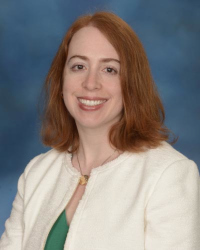
The Office of Community Outreach and Engagement supports research on the role of neighborhood characteristics in the development of aggressive prostate cancer, led by Dr. Kathryn Barry . There is a growing body of research suggesting that where a person lives can play a role in their health, including cancer. Dr. Barry is evaluating the idea that the stress from living in a challenging conditions (e.g., lack of healthy foods, environmental exposures, safety concerns, neighborhood disinvestment) may contribute to the development of aggressive prostate cancer, and that this effect may be even greater for Black men in part due to race-related stressors. With support from our Institutional Research Grant program from the American Cancer Society, Dr. Barry led a pilot study titled “Neighborhood social factors and prostate tumor aggressiveness among Black and White men” to test this research question. Based on data from our catchment area (described above) indicating that prostate cancer is a top cancer concern, the study team engaged two citizen scientists to inform and contextualize the research. Engaged by the Office of Community Outreach and Engagement, the citizen scientists attended research team meetings, reinforcing the importance of studying the differential impact of neighborhood disadvantage on prostate cancer in Black as compared to White men, and highlighted the role of structural racism as a root cause of stress, with a potential biological impact on cancer development and progression. The citizen scientists also identified additional neighborhood-level characteristics for future study, such as environmental and occupational exposures, and contributed to publications generated by the research. Dr. Barry continues to develop research in this area in partnership with investigators at UMGCCC as well as other NCI-designated Comprehensive Cancer Centers.
Research in Cancer Treatment Decision-Making
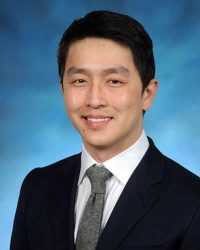
UMGCCC supports community-engaged research on treatment decision-making among patients with thyroid cancer, led by Dr. Yinin Hu . With recent developments suggesting that a less aggressive approach to thyroid cancer treatment may lead to comparable patient outcomes, Dr. Hu is studying patient preferences for treatment of thyroid cancer. With support from the UMGCCC pilot research program, Dr. Hu engaged a Community Advisory Board through the PATIENTS Program [Link to the PATIENTS program web site] to inform his research. The Community Advisory Board members provided input into a series of health state vignettes, weighing in on the content, structure, language, and emotional responsiveness of the vignettes, which are used to evaluate treatment decision-making for thyroid cancer. Community Advisory Board members were also involved in manuscripts that were developed based on this research.