Overview
Lung cancer is a leading public health issue in the US, ranking as the second most commonly diagnosed cancer (after prostate and breast cancer) with persistently high incidence and mortality rates. It predominantly affects older adults (most diagnoses occur after age 65), and tobacco smoking accounts for 80–90% of cases.
While early detection significantly improves survival, uptake remains very low. The 2011 National Lung Screening Trial (NLST) demonstrated that low-dose CT (LDCT) screening reduces lung cancer mortality by 20% in high-risk individuals (ages 55–80 with substantial smoking history). However, fewer than 5% of eligible people actually get screened due to barriers such as cost, lack of awareness, stigma, and fear of false positives. Significant disparities also exist, with low-income and minority populations facing lower screening rates despite experiencing higher lung cancer incidence and mortality.
Rationale
In Maryland, lung cancer remains a leading cause of cancer-related morbidity, mirroring national trends but with unique state-specific dynamics. According to the American Lung Association's 2024 report , Maryland ranks 16th nationally for lung cancer incidence, with a rate of 50.2 cases per 100,000 individuals—lower than the national average of 53.6. Survival outcomes in Maryland have shown encouraging improvement. The state's five-year survival rate for lung cancer is 30.1%, higher than the national average of 28.4%, reflecting advancements in early detection and treatment. Despite these gains, challenges persist. According to the American Lung Association, only 27.4% of lung cancers in Maryland are diagnosed at an early stage, highlighting a substantial gap in timely detection efforts. Among eligible high-risk individuals, only 5.8% received the recommended LDCT screening. In addition, racial and ethnic disparities persist in lung cancer outcomes across the state. Black Marylanders experience lower rates of early-stage diagnosis, surgical intervention, and treatment compared to white Marylanders. Latino and Asian/Pacific Islander residents, while exhibiting lower incidence rates overall, similarly encounter systemic barriers to comprehensive cancer care.
This study represents the second phase (Phase 2) of the Lung Cancer Screening Program led by the University of Maryland Greenebaum Comprehensive Cancer Center (UMGCCC).
- Phase 1 (currently ongoing) focuses on expanding lung cancer screening across Maryland and improving patient access.
- Phase 2 is an implementation science study that builds upon Phase 1. It emphasizes the following:
- Community-based outreach
- Enhanced early detection strategies
The Partnership
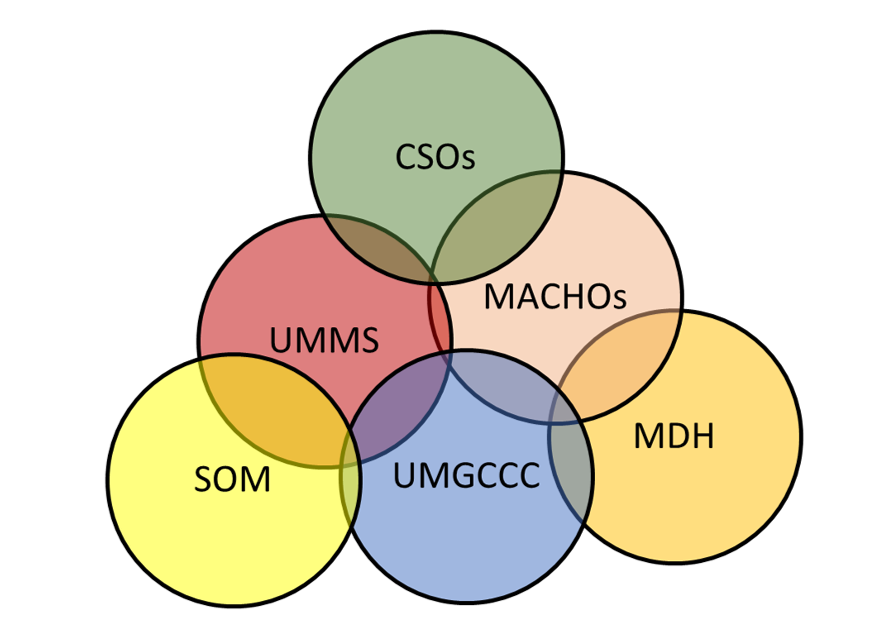
This statewide initiative brings together the University of Maryland Greenebaum Comprehensive Cancer Center (UMGCCC), the University of Maryland Medical System (UMMS), the University of Maryland School of Medicine (UMSOM), Maryland Department of Health (MDH), Maryland Association of Community Health Organizations (MACHOS) and community partners. The partnership integrates expertise in implementation science, lung cancer screening, community outreach and engagement, epidemiology, and health economics to translate evidence based screening into real world practice.
Goal and Aims of the Study
The purpose of this study is to improve screening rates and enhance early detection of lung cancer and to ultimately position the state of Maryland as a national leader in reducing lung cancer incidence and mortality for all residents.
Primary objectives
Specific Aims
- Co-design an mLDCT lung cancer screening model with key partners.
- Assess the effectiveness and implementation outcomes of the mLDCT screening model among individuals aged 50-80 years at risk for lung cancer.
- Determine the economic viability of the mLDCT screening model.
Secondary Objectives
- To assess implementation outcomes and determinants associated with the mLDCT.
- To assess the clinical and service outcomes, including the incidental findings, lung cancer diagnosis, disease progression and related mortality.
To assess the economic viability of the mLDCT model to inform future scale-up plans.
Study Design and Approach
The study is a hybrid type 3 stepped wedge-cluster randomized controlled trial (SW-cRCT) designed to assess the effects of mLDCT on clinical, service, and implementation outcomes compared to facility-based LDCT. A Type 3 hybrid design is intended to assess the impact of the implementation strategy, specifically the mLDCT used in this study. The work is guided by the Exploration, Preparation, Implementation, and Sustainment (EPIS) framework to support co design with stakeholders, context specific adaptation, and long term sustainability.
Mobile Lung Cancer Screening Model
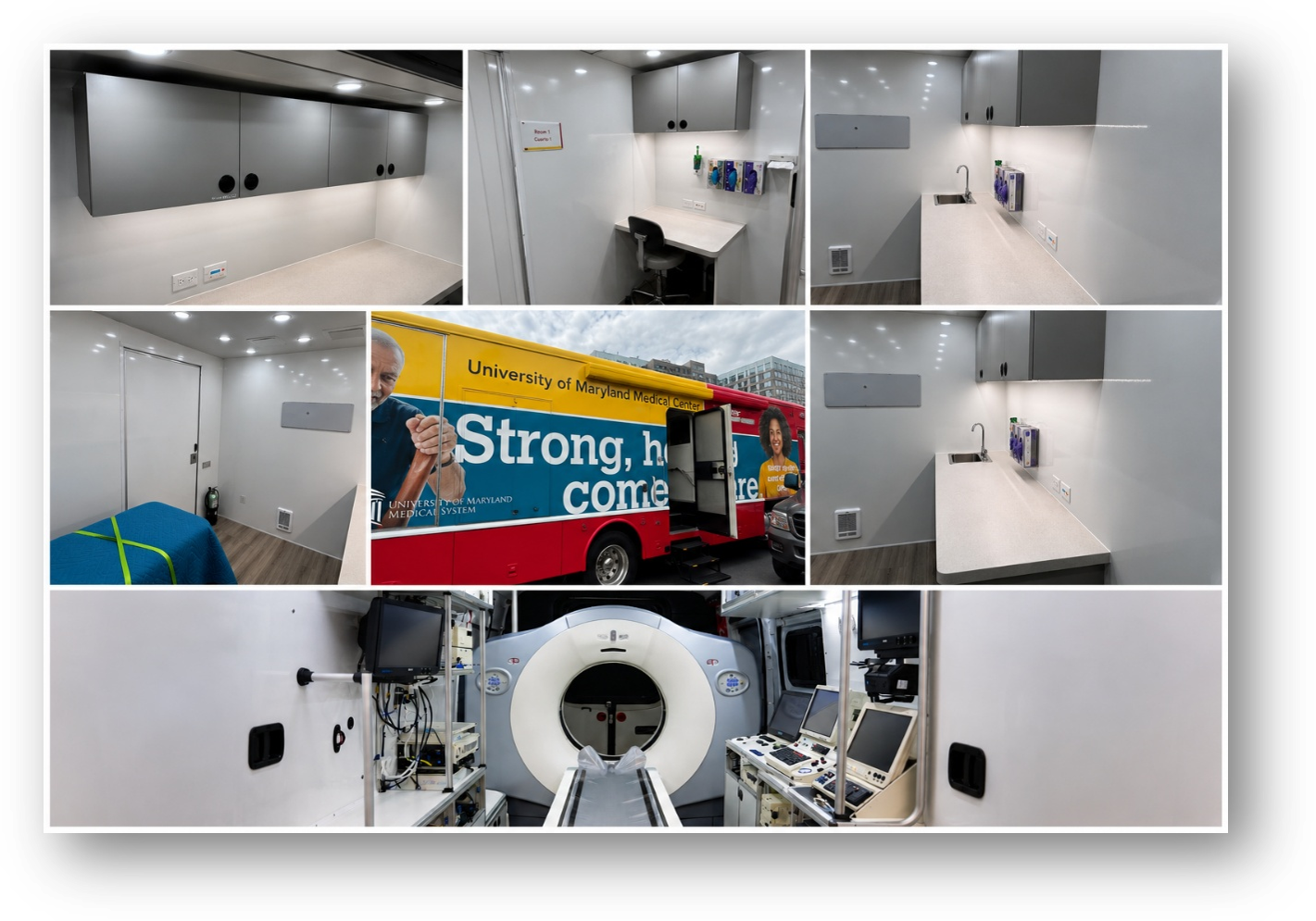
The intervention deploys a fully equipped mobile LDCT unit staffed by trained clinical and patient navigation teams. The mobile model:
- Brings lung cancer screening directly into communities
- Reduce transportation and geographic barriers
- Supports shared decision making and standardized tobacco use assessment
- Integrates imaging and clinical data into UMMS electronic health records
- Ensures diagnostic follow up and treatment occur within UMMS facilities
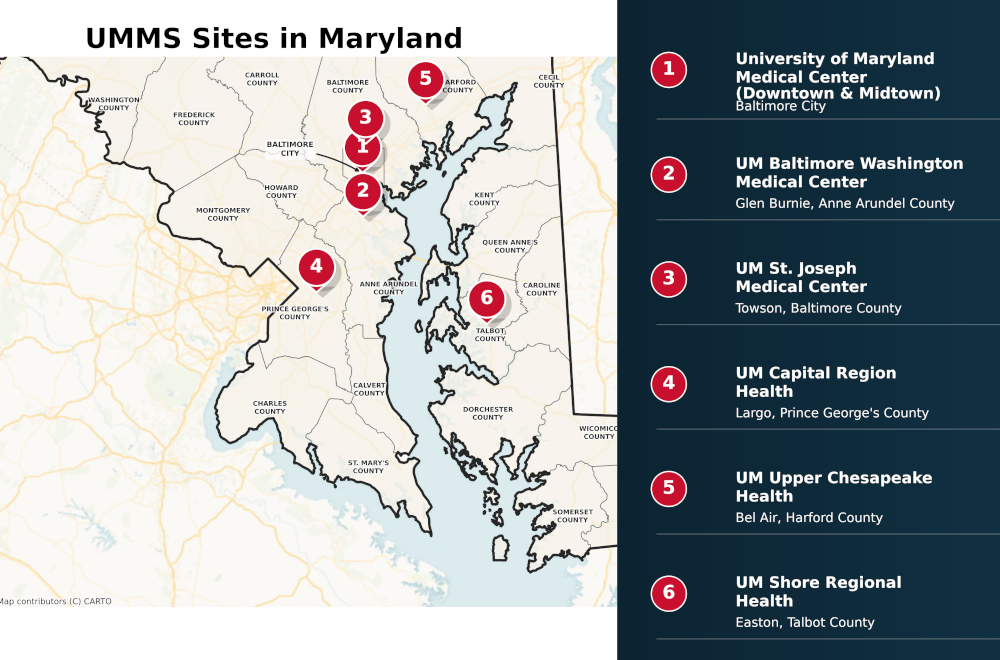
The study is anchored at six UMMS health system sites and their surrounding catchment areas representing urban, suburban and rural regions of the state. The sites are as follows 1) the University of Maryland Downtown and Midtown Centers (UM DTC & MTC); 2) the University of Maryland Baltimore Washington Medical Center (BWMC); 3) the University of Maryland St. Joseph Medical Center; 4) the University of Maryland Capital Regional Health; 5) the University of Maryland Upper Chesapeake Medical Center; and 6) the University of Maryland Shore Regional Health.
These sites support deployment of the mobile unit, facility based comparison screening, and coordinated follow up care.